Showing posts with label biology. Show all posts

Tuesday, August 04, 2015

Hacking Zebrafish thoughts

The last lab from Scalable Machine Learning with Spark features a guest lecture by Jeremy Freeman, a professor of neuroscience at Janelia Farm Research Campus.

His group produced this gorgeous video of a living zebrafish brain. Little fish thoughts sparkle away, made visible by a technique called light-sheet flourescent microscopy in which engineered proteins that light up when the neurons fire are engineered into the fish.

The lab covers principal component analysis in a lively way. Principal components are extracted from time-series data and mapped onto an HSV color wheel and used to color an image of the zebrafish brain. In the process, we use some fun matrix manipulation to aggregate the time series data in two different ways - by time relative to the start of a visual stimulus and by the directionality of the stimulus (shown below).

The whole series of labs from the Spark classes was nicely done, but this was an especially fun way to finish it out.

Check out the Freeman Lab's papers:

Monday, January 12, 2015

Brave Genius

Brave Genius is an unlikely dual biography of a biologist and a writer who shared a friendship and a common philosophy. Both were active in the French resistance to the German Occupation and both would later receive a Nobel prize. Sean B. Carroll forges an inspiring story from seemingly incongruous elements: the desperate defiance of a few in an occupied country, the exhilarating pursuit of an open scientific question, and a lonely stand on the moral high ground.

In 1940, Jacques Monod was a newly married father of twins and a researcher at the Sorbonne. Albert Camus, having already published a couple of books of essays, departed his native Algeria for France in March of that year to find work.

On May 10 1940, German troops crossed into Holland and Belgium. Panzers raced towards the Atlantic coast severing Allied lines and stranding French and British troops in the low countries. French defenses collapsed and Germans arrived in an undefended Paris on June 14. The armistice signed on June 22nd marked the beginning of four years of occupation.

During those years, Camus edited and wrote for the underground newspaper Combat urging resistance to the occupation. As the tide of the war turned, Monod organized sabotage attacks and armed resistance ahead of the approaching liberators.

“I have always believed that if people who placed their hopes in the human condition were mad, those who despaired of events were cowards. Henceforth, there will be only one honorable choice: to wager everything on the belief that in the end words will prove stronger than bullets.” Camus, Combat (November 30, 1946)

François Jacob, André Lwoff and Jacques Monod were awarded a Nobel prize in 1965 for their work on the control of gene expression, elucidating the regulation of the lac operon by which bacteria switch on metabolism of the sugar lactose.

In his writing, Camus confronts the absurdity of the human search for clarity and meaning in a world that offers only indifference. The attempt to derive meaning and morality without resort to mysticism links Camus's philosophy to Monod's scientific work, which provided some of the first direct evidence that life is mechanistic rather than the result of some magical "vital force" and that its workings could be understood.

“The scientific approach reveals to Man that he is an accident, almost a stranger in the universe.” Monod, in On Values in the Age of Science (1969)

“One of the great problems of philosophy, is the relationship between the realm of knowledge and the realm of values. Knowledge is what is; values are what ought to be. I would say that all traditional philosophies up to and including Marxism have tried to derive the 'ought' from the 'is.' My point of view is that this is impossible.” Monod

Carroll, a biologist himself, embeds philosophy and science into the personal lives of his protagonists and the geopolitical events unfolding around them. Both men did brilliant work in the darkest of times, and did so not by retreating but by fully engaging at great risk with the struggles that faced them. The book serves as a warning of what happens when good people overlook the malfeasance of their leaders, but also as confirmation of the resilience of intellect, creativity and humanity.

More

Tuesday, November 11, 2014

The DREAM / RECOMB Conference 2014

The RECOMB/ISCB Conference on Regulatory and Systems Genomics, with DREAM Challenges and Cytoscape Workshops is running this week in San Diego.

A bunch of us from Sage Bionetworks are here to connect with the DREAM community. In introductory remarks, Stephen Friend framed the challenges as piloting new modes of collaboration and engagement addressing multidimensional problems based on the idea that open innovation will trump closed silos.

Lincoln Stein: The Future of Genomic Databases

I first heard Lincoln Stein speak at an O'Reilly conference in 2002, on building a bioinformatics nation. The same themes of openness and integration reappeared in Stein's talk on The Future of Genomic Databases.

Stein asks, "Open Data + open source = reproducible science?" Not exactly. Stein presents some emerging solutions to the remaining obstacles: big data sets, complex workflows, unportable code and data access restrictions.

Cloud computing, specifically colocation of data and compute, enables handling big data. Containers (ie Docker) address the problem of code portability. The Global Alliance is working towards providing APIs both to encapsulate technical complexity and to provide a control point at which to enforce restrictions.

In case we're wondering what to do with all the machine cycles made available by Amazon and Google, bioinformatics workflows are growing in complexity. Workflow managers like Seqware and Galaxy provide a formalized description of multistep processes and manage tools and their dependencies.

Legal restrictions hinder data integration. But, donors want their samples to contribute to research. Licensure for data access combined with uniform consent could reduce the friction resulting in a streamlined data access process. On the other hand, technical solutions involve homomorphic encryption and agent based federated queries.

As a parting thought, Stein notes that digital infrastructure enables experiments in incentive structures and economic models, citing micropayments, ratings, and challenges.

Andrea Califano

Andrea Califano spoke on the genotype to phenotype linkage in cancer. Thinking of the cell as an integrator of signals, Califo's group traces from gene or protein expression signatures of cell states (normal, neoplastic, metastatic) back through the network to the master regulators responsible for that signature. One related paper is Identification of Causal Genetic Drivers of Human Disease through Systems-Level Analysis of Regulatory Networks.

Paul Boutros Somatic Mutation Calling Challenge

Paul Boutros presented the Somatic Mutation Calling Challenge (SMC-DNA). He announced the intention for the SMC challenges to become a living benchmark, an objective standard against which future methods will be tested.

Paul also crowned the Broad Institute's MuTect (single nucleotide) and novoBreak (structural variants) by Ken Chen's lab at MD Anderson the winners of the synthetic tumor phase of SMC-DNA. The plan is to announce winners on real tumor data in February after experimental validation.

The Winners

The SMC challenge is a bit unique for DREAM in its level of specialization. In the other challenge, a couple of methods were highlighted: Gaussian process regression and dictionary learning for sparse representation.

But, increasingly, the main differentiator is application of biological domain knowledge, especially with respect to selecting and processing features. Li Liu of Arizona State's Biodesign Institute, for example, won part of the Accute Myoloid Leukemia challenge by weighting proteins based on their evolutionary conservation.

Another theme is that genetic features seem to have poor signal compared to more downstream features, gene expression or clinical variables. Peddinti Gopalacharyulu, a top performer in the Gene Essentiality Challenge, commented that perhaps the way to use genetics is to extract the component of gene expression that is not explained by genetic features.

DREAM 9.5

Two of the Dream 9.5 challenges are follow-ups to the Somatic Mutation Calling challenge from the 8.5 round. The SMC empire expands into RNA and tumor heterogeneity. In the olfaction challenge, the goal is to predict, from molecular features, odor as described by human subjects. The Prostate cancer challenge asks participants to classify patients according to survival using data sourced from the comparator arms of clinical trials.

For the DREAM 10 round, there's an imaging challenge in the works and a sequel to the ALS challenge challenge from DREAM 7.

On to RECOMB

That's just the DREAM part of the meeting, or, really, the subset that fit into my brain. As an added bonus, there were several representatives from Cytoscape-related projects and some conversation about the Global Alliance for Genomics and Health.

Thursday, July 03, 2014

Galaxy Community Conference

The 2014 Galaxy Community Conference (GCC2014) wrapped up yesterday at Johns Hopkins University in Baltimore. The best part for me was the pre-conference hackathon.

If you're not familiar with Galaxy, it's a framework for wrapping command line bioinformatics tools in a web UI. On top of that, Galaxy adds lots of sophistication around job scheduling, configurable to run its job on SGE, SLURM, and other queuing systems and to run on virtual clusters with Cloudman. Galaxy users can design reproducible workflows and manage tool versioning and dependencies through the Toolshed.

The project has attracted a vibrant community supported by an active Q&A site and an IRC channel. Vendors offer Galaxy appliances, cloud deployments and consulting.

Hackathon

For the hackathon, 40 developers gathered in James Taylor's new computing lab in one of the red brick buildings interspersed with lawns and groves of trees that make up the Hopkins campus. This was a great setting for an accelerated ramp-up on the Galaxy codebase. Out of 18 proposed projects, 9 got far enough to be called finished. I learned how to write tool wrappers and how to access the Galaxy API.

Photo credit - someone on the Galaxy team

Galaxy + Synapse

Specifically, I was there to put together some integration between Synapse and Galaxy, bulding on what Kyle Ellrott had already started. Reproducibile analysis, provenance and annotation are core concerns of both projects, so it seems like a good fit. After data exchange, which Kyle got working, exchanging provenance and metadata sound like logical next steps.

Galaxy histories should be able to refer to Synapse entities and receive annotations along with data objects.

Serializing Galaxy histories, workflows etc. out to Synapse might allow a usage model where a cloud instances of Galaxy can be spun up and shut down on demand, with all the important details preserved in Synapse in between times.

Portable provenance might be a longer term goal. It would be neat to be able to thread provenance through some arbitrary combination of data sources and analysis platforms. All of these provenance-aware platforms - Figshare, Dryad, Synapse, Arvados, Galaxy, etc - ought to be able to share provenance between themselves.

Next year

The whole event was well put together in general. Next year's Galaxy Community Conference is scheduled for 6-8 July 2015 in Norwich, England.

Wednesday, December 11, 2013

DREAM conference

Apparently, live-blogging isn't my thing. This post has been sitting on my desktop getting stale for entirely too long...

I'm just back (a month ago) from the conference for the DREAM challenges in Toronto. It was great to see the Dream 8 challenges wrap up and another round of challenges get under way. Plus, I think my IQ went up a few points just by standing in a room full of smart people applying machine learning to better understand biology.

The DREAM organization, led by Gustavo Stolovitzky, partnered with Sage Bionetworks to host the challenges on the Synapse platform. Running the challenges involves a surprising amount of logistics and the behind-the-scenes labor of many to pose a good question, data collection and preparation, provide clear instructions, and evaluate submissions. Puzzling out how to score submissions can be a data analysis challenge in it's own right.

HPN

The winners of the Breast Cancer Network Inference Challenge applied a concept from economics called Granger Causality. I have a thing for ideas that cross over from one domain to another, especially between economics to biology. The team, from Josh Stuart's lab at UCSC calls their algorithm Prophetic Granger Causality, which they combined with data from Pathway commons to infer signaling pathways from time-series proteomics data taken from breast cancer cell lines.

The visualization portion of the same challenge was swept by Amina Qutub's lab at Rice University with their stylish BioWheel visualization based on Circos. Qutub showed a prototype of a D3 re-implementation. I'm told that availability of source code is coming soon. There's a nice write-up Qutub bioengineering lab builds winning tool to visualize protein networks and a video.

BioWheel from Team ABCD writeup

Whole-cell modeling

In the whole-cell modeling challenge, led by Markus Covert of Stanford University, participants were tasked with estimating the model parameters for specific biological processes from a simulated microbial metabolic model.

Since synthetic data is cheap, a little artificial scarcity was introduced by giving participants a budget with which they could purchase data of several different types. Using this data budget wisely then becomes an interesting part of the challenge. One thing that's not cheap is running these models. That part was handled by BitMill a distributed computing platform developed by Numerate and presented by Brandon Allgood.

Making hard problems accessible to outsiders with new perspectives is a big goal of organizing a challenge. One of the winners of this challenge, a student in a neuroscience lab at Brandice, is a great example. They're condidering a second round for this challenge next year.

Toxicogenetics

Yang Xie's lab at UT SouthWestern's QBRC added another win to their collection in the Toxicogenetics challenge. Tao Wang revealed some of their secrets in his presentation.

From Tao Wang's slides

Wang explained that their approach relies on extensive exploratory analysis, careful feature selection, dimensionality reduction, and rigorous cross-validation.

Keynotes

Trey Ideker presented a biological ontology comparable in some ways to GO called NeXO for Network Extracted Ontology. The important difference is this: whereas GO is human curated from literature, NeXO is derived from data. There's a paper, A gene ontology inferred from molecular networks, and a slick looking NeXO web application.

Tim Hughes gave the other keynote on RNA-binding motifs complementing prior work constructing RBPDB, a database of RNA-binding specificities.

DREAM 8.5

Since the next round of challenges is coming sooner than DREAM's traditional yearly cycle, it's numbered 8.5. There are three challenges that are getting underway now:

Discussion

During the discussion session, questions were raised about on whether to optimize the design of the challenges to produce generalizable methods or for answering a specific biological question. Domain knowledge can give competitors advantages in terms of understanding noise characteristics and artifacts in addition to informing realistic assumptions. If the goal is strictly to compare algorithms, this might be a bug. But in the context of answering biological questions, it's a feature.

Support was voiced for data homogeneity (No NAs, data plus quality/confidence metric) and more realtime feedback.

It takes impressive community management skills to maintain a balance that appeals to a diverse array of talent as well as providers of data and support.

Monday, April 08, 2013

HiveBio: a DIY biology lab for Seattle

Seattle is one of the few cities with a big biotech industry lacking a community lab space. Katriona Guthrie-Honea and Bergen McMurray are going to fix that by creating a DIY bioscience lab. The Seattle HiveBio Community Lab will be a community supported Do-It-Yourself (DIY) biology hacker-space or maker-space.

Katriona Guthrie-Honea is a student at Ingraham High and an intern at Fred Hutch. Bergen McMurray is a neuroscience student and an alumna of the Allen Brain Institute and Jigsaw Renaissance, a maker-space in Seattle's International District.

Worrying about an "innovational stagnation period" because not enough people are learning and playing with biotech, Guthrie-Honea wants to provide a place where people of all ages can do just that.

Synthetic Biology was founded on the idea of bringing an engineering mindset to biotechnology, with one result being BioBricks, the beginnings of a set of modular components. The iGEM competitions drive education and open community around synthetic biology.

But, one could argue that a standard engineer wouldn't make a centrifuge out of a salad spinner or a ceiling fan. To do that, what you need is a hacker.

I love the idea of bringing the hacker mentality to life sciences. Just like we should all take the lids off our computers and root our phones, we should be hacking the yeast in our beer like mad scientist Belgian monks.

Anticipating a May opening, Guthrie-Honea and McMurray are seeking funding from Microryza, which is like a Kickstarter for science, and a great idea in itself.

Do you love the idea, too? Want to help? Just like Kickstarter, Microryza is a crowdfunding platform. Check out their project and kick in a few bucks.

Sunday, February 24, 2013

Mapping phenotype to cell type

Last month, our journal club read Chromatin marks identify critical cell types for fine mapping complex trait variants which features authors representing several of the anchor stores in Boston's shopping mall of biotech (the Broad, Dana Farber, and Brigham and Women's).

I gather that the term chromatin marks means modifications to the histones and other DNA packaging molecules. I'm not sure if the term is also meant to include DNA modifications like methylation or the arrangement of DNA around the histones. In any case, these modifications form part of the eukaryotic regulatory system and data for them is becoming available from ENCODE and other sources.

The cool thing is, at heart, the paper is about a data transformation, specifically a join, a mapping across biological data types. GWAS data links variants at particular loci on the genome to phenotype, typically disease, with a genetic component. Chromatin marks are thought to play a major role in differentiation. Marks at specific loci are associated with cell type. So, now we have a mapping from disease-associated variants to cell type. To complete the loop, many diseases are already known to play out in specific cell types.

The circle could be navigated in either direction, using one type of information to corroborate another. Known affected cell types for a disease may be used to select weak GWAS hits that are likely to be causal or informative about the mechanisms at work. The same might be applied to cancer, maybe helping to guide the search for causal variants implicated in cancers of particular cell types.

The paper categorized GWAS hits associated with LDL cholesterol hyperlipidemia, arthritis, psychiatric disorders, and type-2 diabetes based on one chromatin mark, trimethylation of histone H3 at lysine 4 (H3K4me3), and found a nice enrichment for the expected cell types.

In bloody red are cell types with immune function, blue is brain tissue, yellow groups together adipose, musculoskeletal and endocrine cells, and GI cell types are in bilious green.

The Broad does a nice job of writing up the paper in their news section: Chromatin marks the spot in search for disease pathways.

Links

Monday, October 22, 2012

Complex systems

One hundred years from now, the role of science and technology will be about becoming part of nature rather than trying to control it. - Joichi Ito, MIT Media Lab director

In complex systems, trade-offs are everywhere. Engineers designing technological artifacts carefully balance competing objectives. An economy allocates resources like land, labor and capital to one use or another. Even evolution faces trade-offs.

Optimal bundles for three different incomes--2 normal goods. Price Theory, David D. Friedman

Optimal bundles for three different incomes--2 normal goods.
Price Theory, David D. Friedman

Economists study trade-offs using tools like utility and indifference curves. The figure shows the optimal bundle consisting of two goods (apples and oranges, of course) for three different income levels. The curves represent trade-offs of equal utility; red lines represent income. They intersect at the points X, Y and Z, the points of highest utility achievable at each level of income.

Pareto optimality

At a macro level, millions of competing buyers and sellers make thousands of such trade-offs daily. Such multiobjective optimization problems often shake out in a way described by Pareto optimality. If an allocation of resources in an economy is such that no-one could be made better off without making someone else worse off, that allocation is said to be Pareto optimal. Competitive markets can be shown to deliver a Pareto optimal allocation of resources. Rather than a single optimal point, the Pareto optimal frontier defines a surface in high-dimensional space of best possible trade-offs. The notion of Pareto optimality turns out to be portable to other fields of study.

Evolutionary Trade-Offs, Pareto Optimality, and the Geometry of Phenotype Space (Shoval et al., Science 2012), a short-but-awesome paper from Uri Alon's lab, applies the concept of Pareto optimality to evolutionary biology. The morphology of finch beaks, ant heads, and bat wings are all re-examined in the light of Pareto optimality. The idea applies at the molecular level as well. Microbial gene expression moves along an axis between competing priorities of growth and stress response.

In each case, there is a trade-off among competing objectives - performance at various specialized tasks. One of the simplifying ideas in the paper is to work in terms of measurable task performance rather than the resulting contribution to fitness. Fitness, like the economic concept of utility, is hard to quantify and maybe not precisely knowable.

For example, a beak might be optimized for a particular diet: cracking hard seeds, chewing soft seeds or plucking insects from their hiding places in the bark of a tree. The Pareto frontier defines solutions in which it is not possible to improve performance of one task without sacrificing performance of another. Selection favors phenotypes near the Pareto front. Local environment dictates the distribution of species and individuals along the front.

Complex adaptive systems

Biology, economics and, to some extent, engineering are all turning into the study of complex adaptive systems. Economics is the ecology of money. Biology is just the economics of the jungle. Here are a few big ideas and questions that generalize across disciples.

  • Biology - adaptability
    Living systems are adaptive. They deal with extremes of environment, degrading gracefully with damage and keep on functioning in situations that stop mechanical systems dead. Economic systems, too, are adaptable. New information is constantly being factored into prices carrying signals that balance the needs of consumers with productive capacity. So far, engineered systems fall short in terms of adaptability.
  • Engineering - modularity A hallmark of engineered systems is modularity. In software, we struggle against the entropy of spaghetti-code. But, somehow modularity emerges spontaneously in living systems, their processes algorithmic in nature. Evolved systems are clearly different from engineered systems and are clearly far from fully modular, but, to a surprising degree, modularity is found in biology. What forces cause modularity to arise and what are the opposing forces?
  • Economics - distributed information Information flows through complex systems. Price is an emergent property integrate over millions of individuals each making hundreds of economic decisions daily. Living things, too, aggregate information in order to compute how best to allocate their budget of energy and scarce nutrients to achieve competing objectives. How do complex systems achieve balance, find and maintain stable states (homeostasis) and tend towards optimality? How do feedback mechanisms promote or disrupt stability?

These some of the fundamental features of complex systems: adaptivity, information flow and modularity. (I'm calling the book “Darwin, Hayek, Knuth”. Nice, huh?) Adaptability and robustness emerge from information flowing across interconnected networks often hierarchical in structure.

After bouts of physics envy, biology and economics have arrived at roughly the same place. The toolkits used to study both are converging on the same set of statistical techniques and machine learning algorithms for computationally deriving models from big data.

Both fields are wrestling with the same problems: complexity and uncertainty. With an emerging understanding of the properties of complex systems, we might see more robust engineered systems and the ability to re-engineer systems like economies and metabolisms or ecosystems or at least know the limits to which these systems can be engineered. Learning to engineer complex systems is the frontier of the 21st century.

More

Sunday, June 10, 2012

Scientific imaging with Hanchuan Peng

Hanchuan Peng of Janelia Farm spoke on bioimaging at ISB a couple weeks back. He's doing some very cool work mining microscopy images doing registration - aligning individual cells across images. They've created a 3D atlas of C. elegans which tracks every cell. The still pictures don't don't do it justice. Check out the movies.

By localizing and registering neural fibers in 2,954 fly brains, Peng's group constructing this wiring diagram of the fly's 100,000 neurons.

More

Wednesday, May 02, 2012

Phenotypic constraints drive the architecture of biological networks

Biological networks are often compared to random networks in terms of properties like degree distribution, clustering, robustness and over-representation of network motifs. In a talk this morning, Areejit Samal, a Postdoctoral Fellow in the Price lab at ISB, proposed a new null model based on Markov Chain Monte Carlo (MCMC) sampling to generate realistic benchmark ensembles for metabolic networks and gene regulatory networks. Based on this improved background model, the conclusion is that “phenotypic constraints drive the architecture of biological networks”, which is also the title of the talk.

Applied to the metabolic model of E. coli, the sampling technique involves two steps. In the swap step, a reaction is removed from the network and a new reaction is drawn randomly from the KEGG database to replace it. The proposed new network is then tested by flux-balance analysis. If the new network is viable, it is accepted. If not, it is rejected. So, only networks that are biochemically plausible are sampled.

The technique has implications for systems and synthetic biology as well as evolutionary theory. By approximating the space of all possible networks that might lead to a viable functioning organism, we can better understand what properties these networks have, and maybe better design new networks. By changing the acceptance criteria to enforce viability in a second environment, the algorithm nicely models the evolutionary emergence of modularity.

Samal also showed the same general algorithm applied to the gene regulatory network controlling flowering in Arabidopsis.

I especially appreciated seeing a really cool application of Markov Chain Monte Carlo sampling, a topic covered only a couple weeks back in the Probabilistic Graphical Models class.

Links

Friday, April 27, 2012

Sage Bionetworks Synapse

Michael Kellen, Director of Technology at Sage Bionetworks, is trying to build a GitHub for science. It's called Synapse and Kellen described it in a talk at the Sage Bionetworks Commons Congress 2012, this past weekend: 'Synapse' Pilot for Building an 'Information Commons'.

To paraphrase a Kellen's intro:

Science works better when people build off of each other's works. Every great advance is preceded by a multitude of smaller advances. It's no accident that the invention of the printing press and the emergence of the first scientific journals coincide with the many great scientific discoveries of the age of enlightenment. But scientific journals are stuck in a paradigm revolving around the printing press. In other domains, namely open source software, people are more radically reinventing systems for sharing information with each other. Github is a collaborative environment for the domain of software. Synapse aims to be a similar environment for medical and genomic research.

The Synapse concept of a project packages together data and the code to process it. I tried to download the R script shown in the contents and couldn't, either because I'm a knucklehead or because Synapse is a work in progress. On the plus side, they give you a helpful cut-n-paste snippet of R code in the lower right corner to access the project through their R API. When this is fully implemented, it could provide a key piece of computing infrastructure for reproducible data-driven science.

Sage intends to explore ways of connecting to traditional scientific journals. Picture figures that link to interactive visualizations or computational methods that link to code. I'm a big fan of the "live document" concept and it would be great to see journal articles evolve in that direction.

An unintended consequence of NGS, Robert Gentleman points out, is that the data is too big for existing pipes. Any concept of a GitHub for science will have to incorporate processing biological data in the cloud. I could imagine a Synapse project containing data sets, code and a recipe for standing up an EC2 instance (or several). At a click, a scripted process would run, bootstrapping the machines, installing software and dependencies, running a processing pipeline, and visualizing the results in a browser. How would that be for reproducible science?

Michael Kellen's blog has a bunch of interesting stuff about why building a GitHub for biology is more fun than selling sheets. I bet it is.

Monday, September 19, 2011

Applying control theory to the cell

In a talk about research goals in the systems biology of microbes, Adam Arkin referenced the Internal Model Principle of control theory. Here are a couple definitions.

A regulator for which both internal stability and output regulation are structurally stable properties must utilize feedback of the regulated variable and incorporate in the feedback loop a suitably reduplicated model of the dynamic structure of the exogenous signals which the regulator is required to process.

Towards an Abstract Internal Model Principle Wonham, 1976

That's a mouthful. This one's a little less scary.

Internal Model Principle: control can be achieved only if the control system encapsulates, either implicitly or explicitly, some representation of the process to be controlled.

Lecture notes on Introduction to Robust Control by Ming T. Tham, 2002

Driving this thinking is the discovery that microbes show anticipatory behavior and the associations can be fairly readily entrained and lost in a few generations. Ilias Tagkopoulos and Saeed Tavazoie, in Predictive behavior within microbial genetic networks, demonstrated associative learning through rewiring gene regulatory networks. It turns out that when E. coli senses a shift to mammalian body temperature, it begins the transition to anaerobic metabolism, nicely anticipating the correlated structure of it's environment.

In another example, Amir Mitchell working at Weizmann, showed that yeast anticipates the stages of fermentation in Adaptive prediction of environmental changes by microorganism.

This raises some important questions. How is the internal model encoded within the cell? And how does the cell acquire, parameterize and adjust its internal model over evolutionary time scales? The answers will lead to a deeper understanding of living systems and might even feed new techniques and principles back to control theory.

An interesting challenge will be to experimentally read out the information embedded in the cell's control systems and then the informatics problem of how to represent and work with such things.

Understanding how this works is a prerequisite for re-engineering living systems, otherwise known as synthetic biology, championed by George Church and Drew Endy. This month, by the way, the journal Science has a special issue on synthetic biology.

I'm fascinated by the idea of applying engineering principles to biology - evolved systems, rather than engineered artifacts. Maybe that's because my spaghetti code looks a lot like the messy interconnectedness of biology. Creating software feels organic, rather than wholly predesigned. The engineering of complex software systems tends to be an adaptive evolutionary process. As messy as biology is, modularity naturally emerges. Maybe biology has something to teach us about organizing this chaos.

Wednesday, August 03, 2011

Microarrays

Microarrays are one of the workhorses of modern biology. Measuring transcript levels enables studies of differential expression - asking what the difference is, at the gene expression level, for example, between cancer tumor cells and normal cells.

Bruz Marzolf, who up 'til recently ran my local microarray facility, spoke recently, tracing the journey of microarrays through the full technology life-cycle, starting in 1995 with the publication of Quantitative Monitoring of Gene Expression Patterns with a Complementary DNA Microarray in Science. Bruz put microarrays in the category of a utility technology, but not quite to the point of commoditization as there remain major differences between manufacturers.

  • Affymetrix, first to commercialize microarray technologies, is the 800 pound gorilla. Their photolithography process borrows from computer chip manufacturing and their standardized probe sets are well supported by tools such as Bioconductor. The technology is robust but producing the masks is quite expensive, thus custom arrays are not economical.
  • Agilent, which spun out of HP, uses ink-jet technology. Custom arrays can be designed using Agilent's eArray software. Agilent arrays come in a variety of resolutions including 8x60k, 1x244k and 1x1m with 60mer probes.
  • Illumina builds arrays out of beads coated in oligo probes. Beads are laid out randomly on the slides, necessitating a layout discovery step. These chips have extra redundancy to account for randomness in bead-probe count.
  • Nimblegen's maskless photolithography process is more flexible for custom arrays. Nimblegen provides arrays in 385K, 4x72K, and 12x135K resolutions using 60mer probes. They emphasize high array-to-array data reproducibility.

As an aside, our group uses custom spotted arrays and Agilent arrays. We tried Nimblegen and found that inter-array consistency was excellent, but inter-probe consistency was not. Below we see the ribosomal RNAs and adjacent genes with total RNA measured by a custom Agilent array (in blue) plotted next to a custom Nimblegen array (in green). To be fair there might be other explanations for what we saw, but it certainly looks like there is significant variability between probes that we would expect to have identical readings.

In RNA-Seq: a revolutionary tool for transcriptomics (Nature Reviews Genetics, 2009), Zhong Wang, Mark Gerstein & Michael Snyder show this comparison between microarrays and RNA-Seq.

While RNA-seq, no doubt, has a higher dynamic range, does it really have less noise? Some folks say so. With tens or hundreds of thousands of probes, fairly dense coverage of whole microbial genomes is possible. If you know what you're looking for, microarrays are still cheaper. Discovery oriented work is going increasingly toward sequencing.

Links

Monday, June 06, 2011

Primers in Computational Biology

Nature Biotechnology used to regularly feature primers on various topics in computational biology. Here's an incomplete listing based on what looked interesting to me. Some of these are old, but on topics that are fundamental enough not to go out of style. Lot's of these are just mini-tutorials in machine learning.

...just in case you're in need of some bed-time reading or some mad comp-bio skillz. Sorry if some of these are behind a pay-wall, but there's usually a way around, under or over such walls.

Sunday, April 17, 2011

You can't optimize what you can't predict

In a post about the relationship between predictive analytics and operations research, Harlan Harris says, "You can't optimize what you can't predict." Predictive analytics is using statistical and machine-learning tools on large data sets to find complex relationships in the data and predict future trends. Operations research is the process of optimizing supply chains and industrial systems.

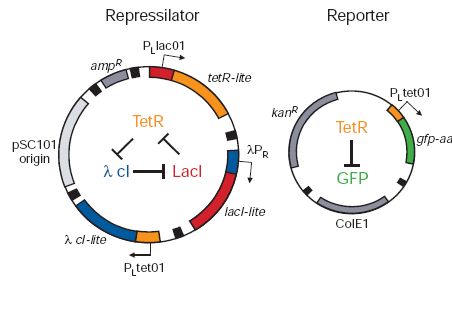
A synthetic oscillatory network of transcriptional regulators, Elowitz and Leibler, Nature, 1999

It's interesting because the same relationship exists between systems biology and synthetic biology. (At least we hope it does.) That is, understanding, modeling and predicting a system will eventually let you bend it towards your own ends. Same techniques, different domains. Systems biology is essentially predictive analytics on biological data. It hopes to build models and discover principles that will guide synthetic biology, which re-engineers biological systems toward novel and useful functions - everything from cleaning up toxic waste to producing energy. And the process of building entirely new biological processes inevitably feeds back into better understanding of natural biological systems.

It would be a great validation of systems biology methods to do a blind analysis of a synthetic biological circuit. Even better would be to predict the behavior of a synthetic system, then build it and see how well we did. If we do that enough times, we can't help but improve our ability to predict and optimize biological systems.

Saturday, November 28, 2009

Leroy Hood on a career in science

ISBLeroy Hood, the founder of the Institute for Systems Biology, where I've worked for 3 years now, wrote up some career advice for scientists last year. It probably applies fairly well to any professional.

I leave students (and even some of my colleagues) with several pieces of advice. First, I stress the importance of a good cross-disciplinary education. Ideally, I suggest a double major with the two fields being orthogonal-say, biology with computer science or applied physics. Some argue that there is insufficient time to learn two fields deeply at the undergraduate level.

I argue that this is not true. If we realize that many undergraduate courses now taught are filled with details that are immediately forgotten after the course is finished, we must then learn to teach in an efficiently conceptual manner. As I noted above, as an undergraduate at Caltech I had Feynman for physics and Pauling for chemistry, and both provided striking examples of the power of conceptual teaching.

Second, I argue that students should grow accustomed to working together in teams: In the future, there will be many hard problems (like P4 medicine) that will require the focused integration of many different types of expertise.

Third, I suggest that students acquire an excellent background in mathematics and statistics and develop the ability to use various computational tools. Fourth, I argue that a scholar, academic, scientist, or engineer should have four major professional objectives: (a) scholarship, (b) education (teaching), (c) transferring knowledge to society, and (d ) playing a leadership role in the local community to help it become the place in which one would like one’s children and grandchildren to live.

Fifth, with regard to the scientific careers of many scientists-they can be described as bellshaped curves of success-they rise gradually to a career maximum and then slowly fall back toward the base line. To circumvent this fate, I propose a simple solution: a major change in career focus every 10 or so years. By learning a new field and overcoming the attendant insecurities that come from learning new areas, one can reset the career clock. Moreover, with a different point of view and prior experience, one can make fundamental new contributions to the new field by thinking outside the box. Then the new career curve can be a joined series of the upsides of the bellshaped curve, each reinvigorated by the ten-year changes.

Finally, science is all about being surrounded by wonderful colleagues and having fun with them, so I recommend choosing one’s science, environment, and colleagues carefully. I end this discussion with what I stressed at the beginning-I am so fortunate to have been surrounded by outstanding colleagues who loved science and engineering. Science for each of us is a journey with no fixed end goal. Rather, our goals are continually being redefined.

ISB recently topped 300 employees and, as of early 2009, had a budget of $55 million. Dr. Hood turned 70 in 2008.